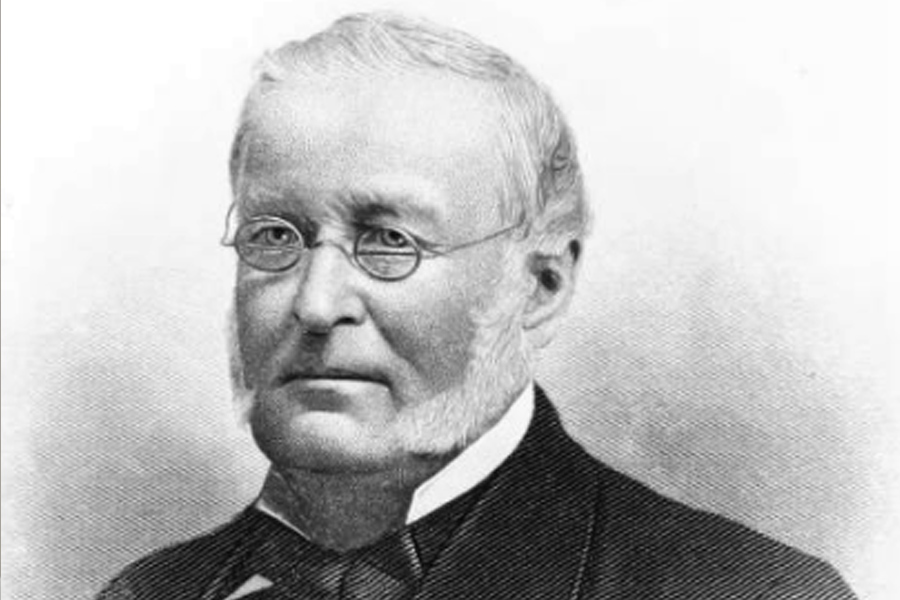
Early life and the restless mind behind a simple idea
I write about him as someone who turned a small farm workshop into a lever that shifted landscapes. Born in the cold beginning of the 19th century, he grew into a practical thinker who treated problems like puzzles: what could hold cattle, goats, and the open prairie in tidy lines? The answer he refined was geometric and brutal and brilliant. On November 24, 1874 he secured a patent, number 157,124, for an improvement in wire fences. That date is more than a line on a résumé. It is a hinge. The invention was elegant: put barbs on one wire, then lock them in place by twisting a second wire around it. It looked small. It changed a continent.
Business partnership and the push to scale: Isaac L. Ellwood
I like to imagine the two of them in a cramped office, accounts spread like maps. The partnership was practical. Ellwood understood manufacturing and distribution. Together they moved from experiment to factory, from neighborly sales to wholesale contracts. By 1876 the product was everywhere, riding freight trains and crossing state lines. Production numbers climbed quickly. Within a few years dozens of firms made versions, and patent litigation followed. He kept his patent active, collected royalties, and converted technical advantage into capital.
Sale, money, and the arithmetic of an invention: Washburn & Moen
I always find financial turns to be revealing. He sold his manufacturing interest for roughly sixty thousand dollars in the 1870s and continued to receive royalty income thereafter. Adjusted for context, that sale made him wealthy in the language of his time. Estimates of lifetime earnings from the barbed wire business run into the hundreds of thousands of dollars, if not more when land and investments are counted. Numbers like 1874, 1876, and six figures anchor the story and explain how a farmer became a prominent local figure and investor.
Home, legacy, and place: Glidden Homestead, DeKalb, Illinois and Northern Illinois University
I walked through the homestead in my imagination: red brick, barn timbers, a yard that once heard the snip of wire as the world was reshaped. He invested in land and community. He gave pieces of property that later helped establish a teachers college which evolved into a university. In DeKalb his name became fixed to streets and buildings and to local memory. The homestead endures as a house that remembers dust, steam, and the hum of early industry.
Family and relations: June Helene Glidden, Luzelle Glidden, Starla Baskett and the Efron connection with Zac Efron and Dylan Efron
I thread family lines. June Helene Glidden and Luzelle Glidden are descendants, while some family trees list Starla Baskett as a grandchild. These trees sometimes include recent names like Zac and Dylan Efron as distant relatives several generations away. Family histories are woven from official records and softened memories. Parent-child, grandparent, and cousin ties are patchwork, with different times and migrations. I list family members with humility, knowing that genealogies are preliminary and that a surname can belong to many branches that never meet.
Family table
| Relation | Name | Notes |
|---|---|---|
| Descendant | June Helene Glidden | Born 1926, passed 1994; appears in 20th century family trees |
| Descendant | Luzelle Glidden | Listed in family submissions; exact dates vary |
| Grandchild | Starla Baskett | Appears in some lines as a direct grandchild |
| Distant relative | Zac Efron | Modern celebrity listed in hobbyist genealogies |
| Distant relative | Dylan Efron | Often paired with Zac in public family charts |
Career details and achievements in my own words
First a teacher, then a farmer, then an inventor and industrialist. He invested in newspapers and banks after serving in his county’s governmental office. His technical accomplishment was small but significant. His legal history begins with patent 157,124, but it includes manufacturing, licensing, and litigation. He defended his rights in court, not with firearms. Manufacturing and shipping became reliable and practical when he fixed barbs with a twisted second wire. The ripples influenced livestock, settlement, and military defenses.
Finance snapshot
I keep numbers because they tell a different truth than stories. Key financial moments:
- Patent issued: November 24, 1874.
- Sale of manufacturing interest: approximately 60,000 dollars in the mid 1870s.
- Royalties and lifetime earnings: substantial six figure amounts estimated in contemporary accounts.
- Land holdings: hundreds of acres at various points in his life.
Timeline
| Year | Event |
|---|---|
| 1813 | Birth year of the inventor I am discussing |
| 1873 | Development work that led to the patent |
| 1874 | Patent 157,124 issued on November 24 |
| 1876 | Sale of manufacturing interest; rapid expansion of production |
| 1906 | Year of death |
Personal notes and color
I imagine him as both stern and practical, a man who liked measurable outcomes. He was shaped by frontier economics and by the urgency of rural life. He married twice, raised children, and watched some of his early offspring die in an era of high infant mortality. He is a man whose invention produced both order and conflict; the wire that kept cattle penned also intensified disputes over land.
FAQ
Who was Joseph Henry Glidden?
He was the practical inventor who patented an effective design of barbed wire in 1874, a farmer turned businessman who altered land use across the United States.
What exactly did he patent?
He patented an improvement in wire fences that fixed barbs in place by twisting a second wire around a barbed wire core. The patent number is 157,124 and the issue date is November 24, 1874.
How did he make money from the invention?
He manufactured and licensed the design, partnered with a manufacturer, sold his manufacturing interest for roughly 60,000 dollars in the 1870s, and collected royalties thereafter.
Did he have notable family members?
Family trees list names such as June Helene Glidden, Luzelle Glidden, and Starla Baskett as descendants or relatives. Some hobbyist genealogies extend the line to modern names like Zac Efron and Dylan Efron as distant relatives. These links are often several generations removed.
Where did he live and what remains of his home?
He lived in and around DeKalb, Illinois. The red brick homestead remains as a historic site and museum that interprets his life and the cultural shifts his invention helped create.
What was the broader impact of his invention?
Barbed wire reshaped settlement and agriculture. It fenced the open range, altered animal migration, reduced the need for long herding, and became a symbol of enclosure and the industrialization of the rural landscape.
Are the genealogical claims connecting him to Hollywood actors firm?
These claims appear in public family trees and hobbyist blogs. The connections are often plausible on paper but typically require primary civil records for definitive confirmation.
What else should I know about his legacy?
Beyond patents and money, he left a landscape of fenced fields and changed local economies. His name lives on in institutions and place names, and the simple spiral of wire he perfected still marks boundaries across continents.